



Teaching Staff
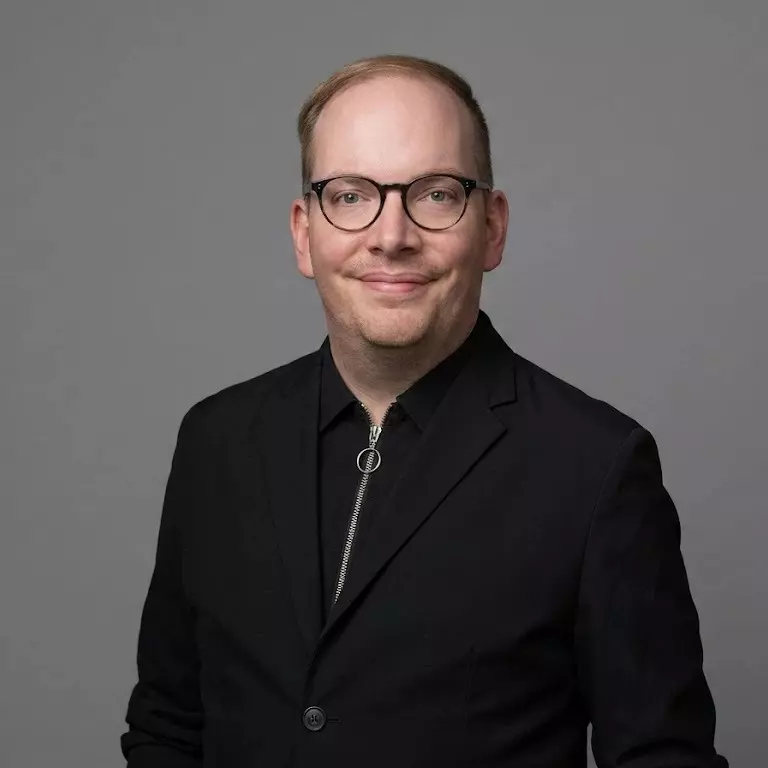
Gabriel RÉMY-HANDFIELD
- Research Assistant Professor
- OfficeRRS617
- Tel3411 2740
- Emailgabrielr-h at hkbu.edu.hk
Gabriel Remy-Handfield is a comparative literature scholar who specializes in contemporary Sinophone digital art and visual culture. He received his Ph.D. in Comparative Literature from the University of Montreal, where he completed a doctoral dissertation entitled “Lu Yang: An Aberrant Aesthetic”, that focused on media artist LuYang. Previously, he was a SSHRC Postdoctoral Fellow at the Australian National University where he was affiliated with the China Centre in the World, and the School of Culture, History, and Language. His research engages with literary and visual production across East and Southeast Asia—encompassing literature, cinema, and digital art—and is informed by critical and conceptual approaches such as posthumanism, monster theory, speculative aesthetics, and queer and psychoanalytic thought.
Gabriel’s scholarship on media artists like LuYang and Huang Hsin-chien appears in Screen Bodies, the Journal of Chinese Film Studies, and the Journal of Contemporary Chinese Art. His upcoming publications include a co-edited volume on LuYang (Bloomsbury East Asian Screen Cultures), a co-written book chapter on sci-fi writer Chi Ta-wei (Liverpool University Press), and a journal article on artist Li Yi-Fan in the Journal of Chinese Cinemas.
1. Digital Monstrosity and The Speculative Uncanny in Global Asian Digital Art
My research examines the interplay between aesthetics, technology, and identity in contemporary East and Southeast Asian cinema and digital art. Working at the intersection of posthuman studies, media studies, and literary and cultural analysis, I investigate how speculative fiction, film, digital art, and performance articulate emerging visions of subjectivity, embodiment, and futurity in technologically mediated societies.
I specifically explore how digital technologies such as digital animation, motion capture, virtual reality and AI enable artists to generate uncanny, grotesque, and monstrous reconfigurations of the body. These interventions prompt critical reflection on the porous boundary between human and machine, the familiar and the strange, while revisiting the rich aesthetic traditions of the grotesque and the monstrous in Asian contexts. By revisiting and re-conceptualizing the categories of the monstrous, the grotesque, the uncanny, and the abject not merely just as disturbances but as generative forces, my work uncovers new possibilities for thinking about embodiment and subjectivity in the digital era. My monograph in progress, Digital Monstrosity and the Speculative Uncanny in Contemporary Global Asian Film and Media, theorizes both “digital monstrosity” and “speculative uncanny” as a critical framework for understanding how Asian artists interrogate and transform boundaries between human, technology, and the monstrous.
Edited books
1. Lu Yang’s Multiple Worlds, co-edited with Livia Monnet, Global East Asian Screen Cultures, Bloomsbury Press, forthcoming 2027.
Book chapters
1. “Gender in/on the Brain: Plasticity and Non-Human Transness in Chi Ta-wei’s novel The Membranes”, written with Alberto Poza Poyatos. Handbook of Trans Science Fiction, Liverpool University Press, edited by Douglas Vakoch and Sabine, forthcoming 2026.
2. “Buddhism and Abject Body in LuYang’s Crime and Punishment and Kago Shintaro’s Mandalism”. In LuYang’s Multiple Worlds, co-edited with Livia Monnet, Global East Asian Screen Cultures, Bloomsbury Press, forthcoming 2027.
Peer-reviewed journal articles
1. “Weirding 3D CGI Animation: Digital Puppetry and the “World Without Others” in Li Yi-Fan’s howdoyouturnthison (2021)”. 3D CGI Animation, special issue of Journal of Chinese Cinemas, edited by Daisy Yan Du. Forthcoming 2027.
2. “Reimagining the body: Speculative reincarnation and science fiction in Samsara (2021) by Huang Hsin-Chien”, Journal of Contemporary Chinese Art, Special Issue: ‘When the Shadow Flickers: The Moving Image in Contemporary Chinese Art’, 12:1, pp. 113–29, 2025.
3. “Towards a Techno-Hauntological Aesthetic: Immiscible Time and the Spiritual Imagination in Bodyless (Shishenji, 2019) by Huang Hsin-Chien” Journal of Chinese Film Studies, vol. 4, no. 3, pp. 527-543, 2024.
4. “The Aesthetic of the Grotesque in Lu Yang’s Delusional Mandala and Delusional World”. Screen Bodies. 7(1): 111-127, 2022.
5. “Lu Yang: an artist in translation”. Co-written with Ari Heinrich and Livia Monnet. Screen Bodies. 7(1): 1-12, 2022.
6. Queer Sinofuturism: The Aberrant Movements and Posthumanist Mutations of Body, Identity, and Matter in Lu Yang’s Uterus Man”. Special issue on Queer Sinofuturisms,
Screen Bodies. 5(2): 106-122, 2020.
7. “Réception queer de L’Anti-Oedipe de Gilles Deleuze et de Félix Guattari: Mouvements aberrants et subjectivité post-humaine” Études francophones. 31: 53-70, 2019.
8. “Le Nécrophile de Gabrielle Wittkop : la perversion, l’abjection et l’anti-relationalité queer”. Voix Plurielles. 15(2): 154-166, 2018.